Peer Review Process
What is peer review?
Peer review is the system used to assess the quality of a manuscript before it is published. Independent researchers in the relevant research area assess submitted manuscripts for originality, validity and significance to help editors determine whether a manuscript should be published in their journal.
How does it work?
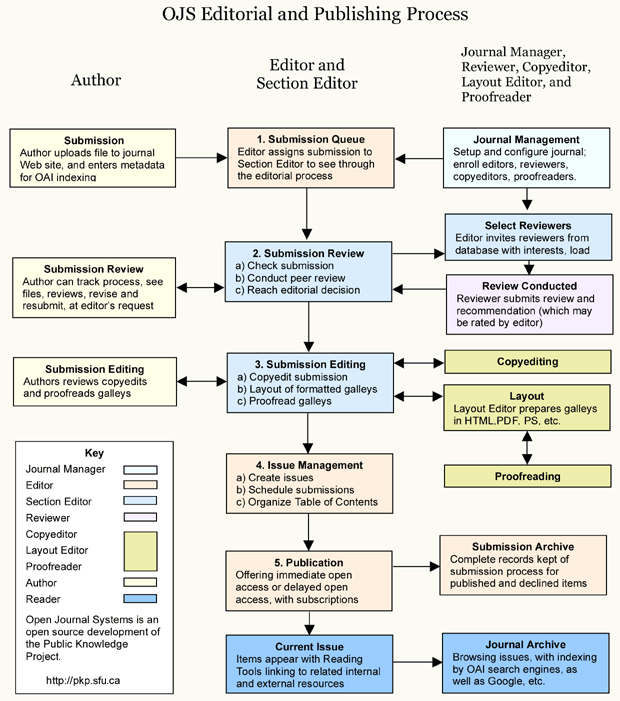
When a manuscript is submitted to a journal, it is assessed to see if it meets the criteria for submission. If it does, the editorial team will select potential peer reviewers within the field of research to peer-review the manuscript and make recommendations.
Why do peer review?
Peer review is an integral part of scientific publishing that confirms the validity of the manuscript. Peer reviewers are experts who volunteer their time to help improve the manuscripts they review. By undergoing peer review, manuscripts should become:
More robust - peer reviewers may point out gaps in a paper that require more explanation or additional experiments.
Easier to read - if parts of your paper are difficult to understand, reviewers can suggest changes.
More useful - peer reviewers also consider the importance of your paper to others in your field.
How peer review works
Peer Review Policy
The Journal of Education and Teaching Learning (MJPJETL) is dedicated to promoting excellence by disseminating high-quality research findings in the field of education through a rigorous and objective evaluation process. To maintain the highest scholarly integrity, this journal implements a strict double-blind peer-review system for all submitted manuscripts.
1. Initial Desk Review All submitted manuscripts undergo an initial assessment by the Editorial Board. At this stage, editors evaluate the manuscript for its alignment with the journal's focus and scope, formatting compliance, and textual originality before being sent for peer review. The maximum acceptable similarity index for submissions to MJPJETL is 15%, verified via professional plagiarism detection software. Manuscripts exceeding this threshold or lacking basic scholarly merit will be returned to the author for revision (Return to Author) or face immediate rejection (Desk Reject).
2. Double-Blind Peer-Review Process Submissions that pass the initial evaluation are assigned to at least two independent Reviewers identified based on their specialized expertise. The review process strictly operates under a double-blind framework, meaning both the reviewers' and authors' identities are mutually concealed throughout the review cycle to ensure an unbiased, impartial, and independent evaluation.
3. Reviewer Evaluation Criteria Reviewers conduct critical assessments by examining the following core components:
-
Originality and contribution of findings across branches of education and teaching-learning processes.
-
Clarity, precision, and methodological evaluation of the research.
-
Substantive alignment with pedagogical innovation, teacher education, or applied research.
-
Adherence to ethical standards established by the Committee on Publication Ethics (COPE).
4. Final Editorial Decision Reviewers provide systematic evaluations alongside decision recommendations (Accept, Reject, or Revision). However, the absolute authority and sole responsibility for the final decision to accept or reject a manuscript rests entirely with the human Editors based on editorial judgment and reviewer insights.